
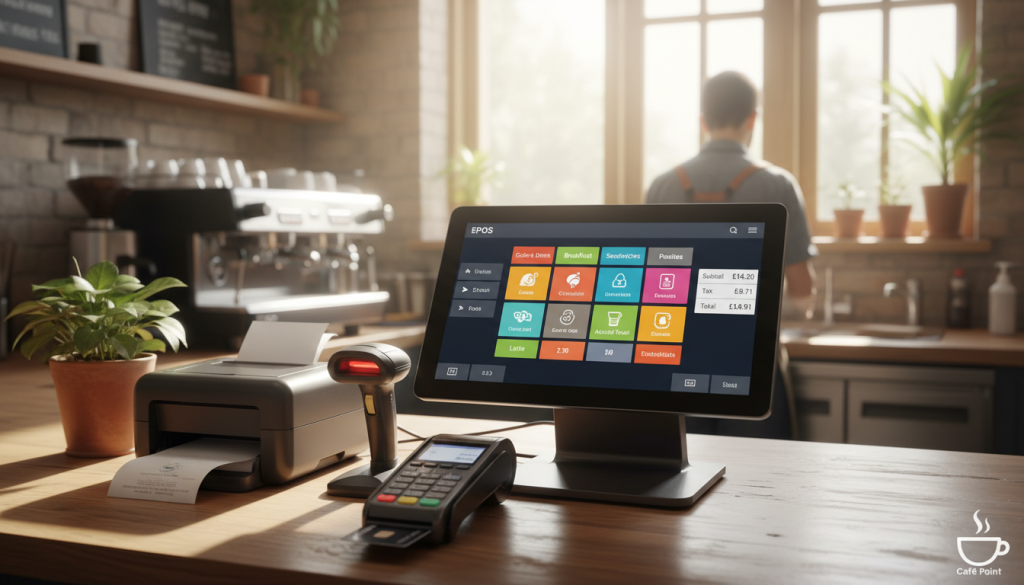
In the fast-paced world of UK hospitality, the margin for error is razor-thin. Whether you are running a high-volume bistro in the heart of London or a boutique coffee shop in a quiet suburb, the efficiency of your workflow defines your bottom line. Long gone are the days of paper tickets and manual calculations. Today, the “human touch” in hospitality is actually supported by invisible, robust technology.
For business owners, selecting a professional epos for restaurant environments or a specialized cafe point of sale system isn’t just a technical upgrade—it’s a strategic move to reclaim time and protect profits.
The Evolution of Service: Speed and Accuracy
The core of any great dining experience is flow. When a customer walks through your door, they expect a seamless transition from greeting to seating, and from ordering to payment. Any friction in this process—a lost order, a slow payment terminal, or a billing error—diminishes the brand.
A modern epos for restaurant use acts as the central nervous system of the business. It bridges the gap between the front-of-house staff and the kitchen. By utilizing cloud-synced terminals and handheld ordering, servers can send requirements to the kitchen instantly. This doesn’t just speed up the food; it allows the staff to stay on the floor, engaging with guests rather than running back and forth to a stationary till.
Tailoring Technology to the Space: The Cafe Dynamic
Cafes and coffee shops operate on a different rhythm than full-service restaurants. Here, the focus is on high-volume, rapid transactions, and often, complex customizations (the “oat milk, extra shot, vanilla” orders). A generic till system often fails under the pressure of a morning rush.
This is why a dedicated cafe point of sale system is essential. These systems are designed with “quick-tap” interfaces, allowing baristas to process orders in seconds. Furthermore, integration with loyalty programs is vital for cafes. Since the business model relies heavily on repeat local customers, having a POS that recognizes a regular and applies a discount or “tenth coffee free” automatically is a powerful retention tool.
Beyond the Transaction: Management and Analytics
The most overlooked benefit of high-quality software is the data it leaves behind. For a restaurateur, knowing what sold is just as important as knowing what didn’t.
Professional systems provide deep-dive analytics into:
- Inventory Management: Real-time tracking of stock levels helps prevent the “sold out” awkwardness during a busy shift.
- Staff Performance: Understanding peak hours allows for smarter scheduling, ensuring you aren’t overstaffed during lulls or understaffed during rushes.
- Profit Margins: By analyzing the cost of ingredients against menu prices, owners can identify which dishes are their true “stars” and which need a recipe or price adjustment.
Companies like Cube POS have recognized that a business owner cannot be everywhere at once. Their systems allow for remote access, meaning you can check your shop’s performance from your phone, whether you’re at home or scouting for a second location.
Scalability and the Future of UK Hospitality
As we move further into a digital-first economy, the requirements of hospitality tech will only grow. We are already seeing the rise of QR code ordering, self-service kiosks, and direct integrations with delivery giants. A business using an outdated system risks being left behind as “digital native” competitors offer more convenience to the customer.
Investing in a robust epos for restaurant operations today ensures that your business is scalable. Whether you want to add more tables, open a second branch, or launch an online ordering wing, your POS should be the foundation that makes that growth possible, not the bottleneck that prevents it.
Conclusion: Making the Right Investment
Choosing your technology is just as important as choosing your head chef or your location. It is an investment in the sanity of your staff and the satisfaction of your customers. By opting for a professional cafe point of sale system or a comprehensive restaurant EPOS, you are removing the technical hurdles that lead to burnout and errors.
In the end, the goal of technology in a restaurant or cafe is to get out of the way. When the systems work perfectly, the staff can focus on the food, the atmosphere, and the guests—the things that truly make a hospitality business thrive.