
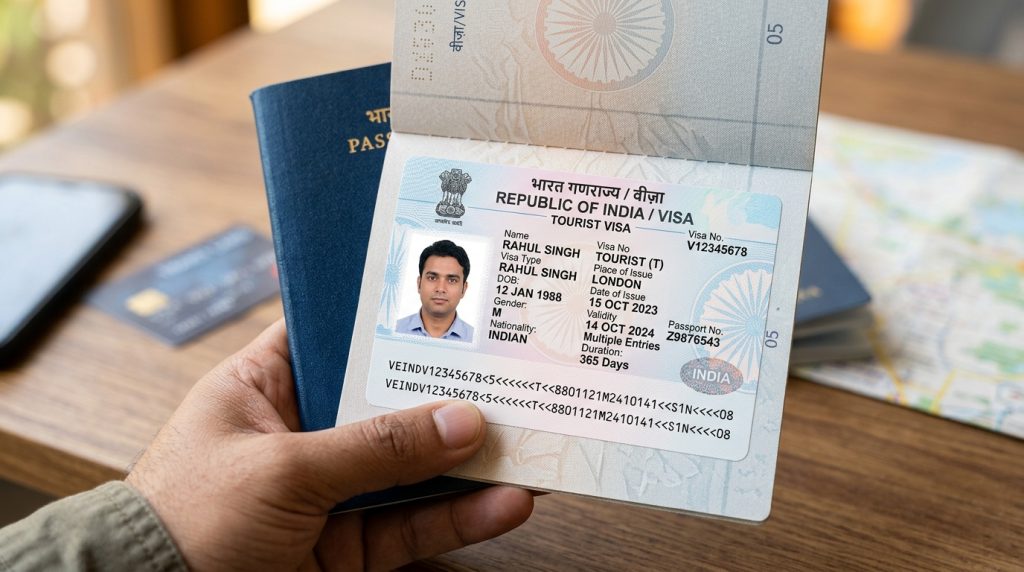
As India continues its rapid ascent as a global economic powerhouse and a major international aviation hub, the volume of travelers passing through or conducting business in the subcontinent has reached unprecedented heights in 2026. Whether you are a corporate executive finalizing a trade deal in Mumbai or an international traveler catching a connecting flight through New Delhi, understanding the specific entry protocols is the key to a frictionless journey.
The Logistics of Passing Through
India’s major international airports are strategically positioned, making them frequent layover destinations for flights connecting Europe, the Middle East, and Asia. If your itinerary includes a stopover, you must first determine whether your connection requires you to officially enter the country.
Generally, if you have a connecting flight on a single ticket, your luggage is checked through to your final destination, and your layover is less than 24 hours, you can remain in the international transit lounge without requiring a visa. However, the scenario changes if you need to re-check your baggage, switch airport terminals that require passing through immigration, or wish to book a hotel outside the airport precincts to rest during a long layover.
In these cases, you will need proper travel authorization. Consulting a comprehensive INDIAN TRANSIT VISA resource will clarify the exact requirements for your nationality. Typically, this specialized entry permit is valid for a short window—usually allowing a stay of up to 72 hours per entry—and requires proof of confirmed onward travel to a third country before it is issued.
Expanding Corporate Horizons
Beyond transit, the Indian market offers immense opportunities for global investors, entrepreneurs, and corporate specialists. The government has modernized its digital infrastructure to facilitate this influx of foreign expertise, making short-term commercial visits highly efficient.
If your travel purpose involves attending trade exhibitions, negotiating contracts, setting up industrial ventures, or participating in short-term technical meetings, a standard tourist permit is insufficient and legally inappropriate. Instead, international professionals should rely on an INDIAN BUSINESS VISA GUIDE to navigate the e-Visa system. The Business e-Visa is explicitly designed for commercial engagement, typically granting a one-year, multiple-entry authorization that permits continuous stays of up to 180 days.
To secure this authorization, applicants must provide specific documentation validating their commercial intent. This usually includes a digital copy of a professional business card and, most importantly, a formal invitation letter from the host company or organization in India.
Pro-Tips for Seamless Processing
- Passport Validity: Ensure your passport remains valid for at least six months from your planned date of arrival in India and contains at least two blank pages for official stamps. This is strictly enforced by airlines.
- Digital Precision: When applying online, ensure your digital photograph meets the exact specifications (a square format with a plain white background) and that your passport’s biographical page scan is entirely legible. Poor image quality is the leading cause of application delays.
- Timing: While e-Visas and transit authorizations can be processed in as little as 24 to 72 hours, it is always professional practice to submit your application at least four to seven days prior to your departure to account for any unexpected administrative queries.
By addressing these logistical requirements with careful planning, you ensure that your focus remains exactly where it should be—on making the most of your travel experience or closing your next big international deal.